OEM vs ODM: Key Differences Every Beauty Brand Should Know
You ask three cosmetics factories for a quote and get three different answers. One offers OEM, one offers ODM, and the third says it does both, plus private label. The terms sound almost the same. Even general reference sources point out that the term OEM is often used loosely to describe several different ways of making a product. That makes it hard to compare what you are really paying for.
This guide explains OEM vs ODM in plain terms, with a focus on skincare, cosmetics, hair care, body care and fragrance. You will see who develops the formula in each model, who owns it, how cost and timing change, and which questions to ask before you sign anything.
The short answer: the difference between OEM and ODM comes down to who creates the product. With OEM (original equipment manufacturer), the product is made to your brief and specification, so it is unique to your brand. With ODM (original design manufacturer), the factory already has a proven formula, and you customise and brand it. A third route, private label, lets you put your brand on a finished catalogue product.
OEM vs ODM at a Glance
Here is how OEM and ODM compare on the points that matter most to a brand owner, alongside private label, the third route most beauty brands consider.
| Factor | OEM | ODM | Private label |
|---|---|---|---|
| Who develops the product | Built to your brief, or to your own formula | The factory's existing formula, customised for you | A finished product from the factory's catalogue |
| Who owns the formula | Usually you, if the contract says so | Usually the factory | The factory |
| How much you can change | Almost everything | Selected parts, such as scent, colour and packaging | Little beyond the label, sometimes the scent |
| Time to launch | Longest | Shorter | Shortest |
| Upfront development cost | Highest | Lower | Lowest |
| Exclusivity | High | Low, unless agreed in writing | Low, unless agreed in writing |
| Best for | Hero products and unique claims | Fast launches and range extensions | Testing demand quickly |
One point sits under every row of this table. In electronics, the valuable thing is the product design and the moulds. In cosmetics, it is the formula. Keep that in mind as you read on.
What Is OEM (Original Equipment Manufacturer)?
In the textbook meaning, an original equipment manufacturer makes a product to another company's design. The brand owns the design. The factory builds it, checks the quality and ships it under the brand's name.
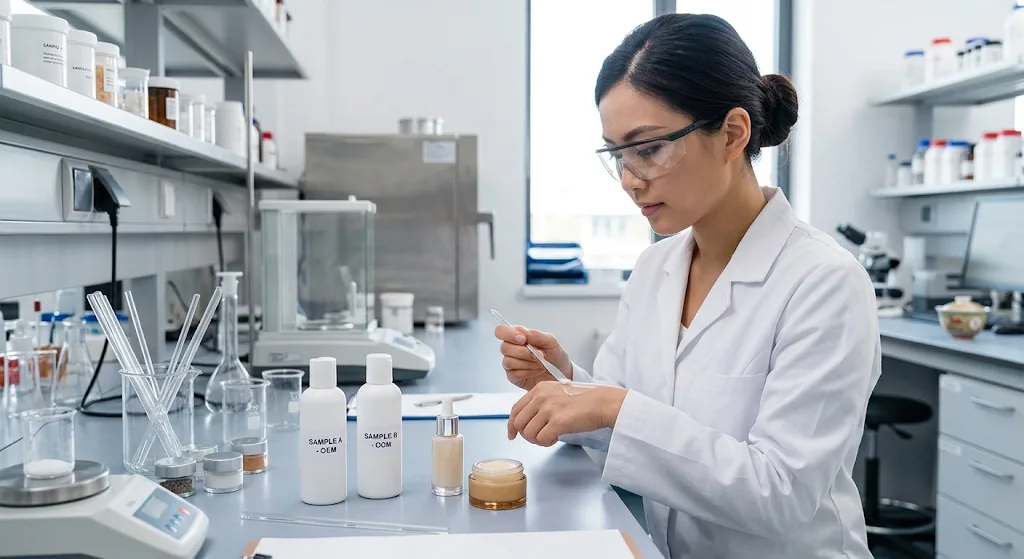
In beauty, few brand owners arrive with a finished formula. Most arrive with a brief. So at many cosmetics factories, OEM means custom development: the factory's R&D team builds a new formula to match your brief, then produces it for you.

A typical OEM project for a skincare product runs in four stages:
- You share the brief: target customer, claims, texture, key actives, scent and price point.
- The R&D team makes lab samples and refines them with your feedback.
- The chosen formula goes through stability and packaging compatibility checks.
- Production runs under the factory's quality system, with batch records you can ask to see.
Because the formula is new, OEM takes the longest and costs the most up front. What you get in return is a product no other brand can buy off the shelf. That matters most for a hero product, such as a new serum built around one specific active, or a skincare OEM line with one clear promise to the customer.
Before you pay for development, ask one question: who owns the formula once it is finished? We cover that in detail further down.
What Is ODM (Original Design Manufacturer)?
An original design manufacturer designs the product itself and offers it to many brands. In cosmetics, that means the factory keeps a library of proven bases: a cleanser, a body lotion, a shampoo, a perfume oil. Each base already has test data and a production history behind it.
You pick a base and customise the parts the factory allows. That is often the scent, the colour, the packaging and sometimes a featured ingredient. The core formula stays the same.
ODM suits products where speed matters more than uniqueness. Body care products such as shower gel, lotion and hand soap are common examples, because buyers often choose them on scent, feel and price. A new fragrance range can also start from proven scent bases and still feel personal to the brand.
The downside is exclusivity. The same base may be sold to other brands, and some of them may sell in your market. If that worries you, ask whether the factory can offer exclusivity for your country or sales channel, and get the answer in writing.
It is also worth asking whether the factory sells products under its own brand. Some manufacturers run consumer brands of their own, which makes them an OBM (original brand manufacturer) as well. If so, ask whether your chosen base, or a close version of it, is sold under the factory's own label in your market.
Where Private Label and White Label Fit
When brand owners compare OEM vs ODM, a third option usually comes up: private label.
Private label means choosing a finished product from the factory's catalogue and putting your brand on it, with small changes such as scent where the factory allows them. White label is the most basic version of the same idea. The formula is rebranded with no changes and is usually sold to many brands, while a private label arrangement can come with some exclusivity.
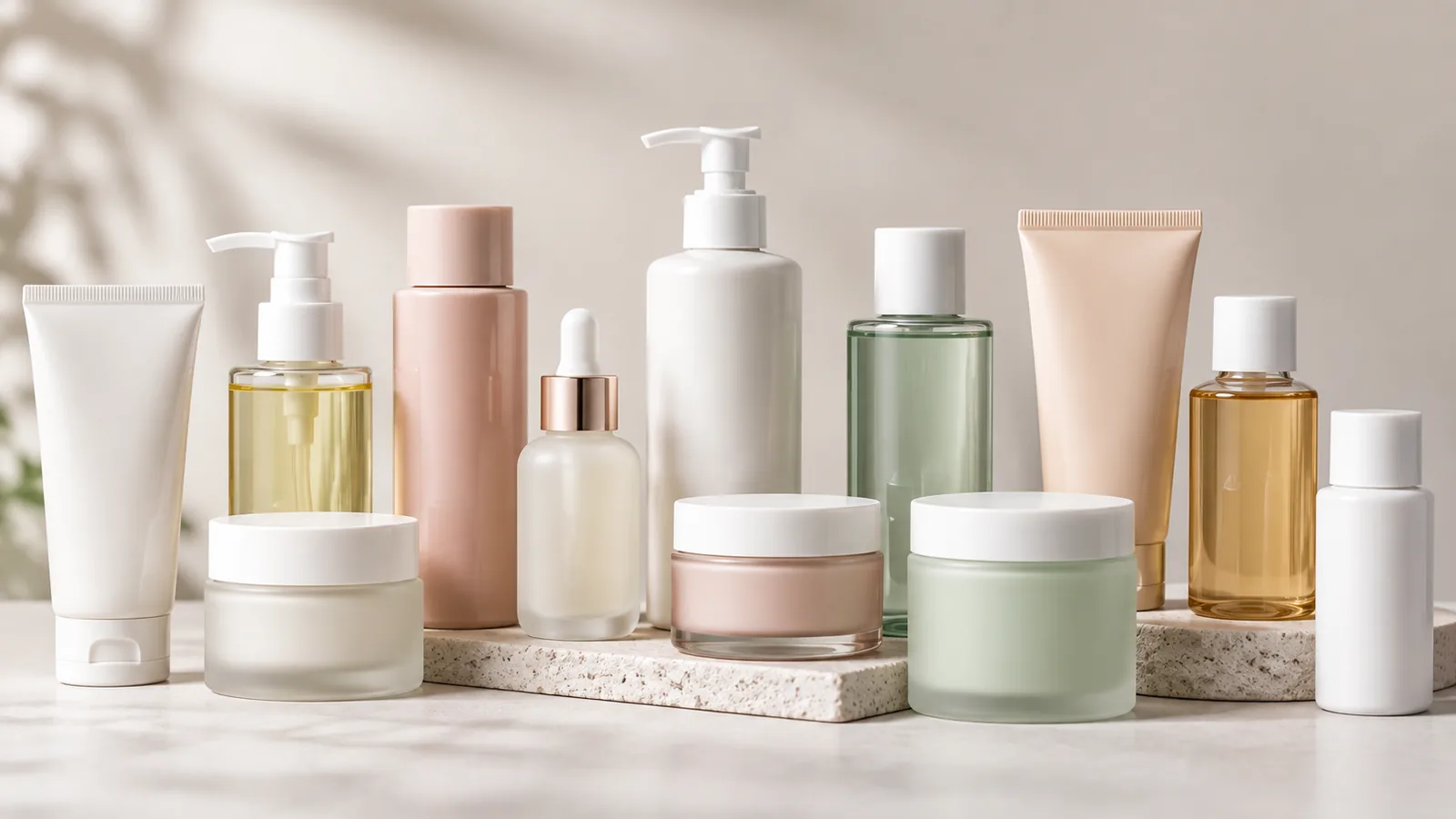
In practice, many cosmetics factories group these two as a catalogue route. It is the fastest and lowest-risk way to launch, which is why new brand owners often use it to test demand before spending on development.
So for most beauty brands, the real choice is between three routes: OEM for a unique product, ODM for a proven base you customise, and private label for a catalogue product you brand. These OEM and ODM routes can also run side by side within a single project.
Why the Labels Get Mixed Up in Cosmetics
Most articles on ODM vs OEM are written for electronics. In that world, the brand designs the device and the factory builds it. The brand brings the design; the factory brings the production line.
Cosmetics does not fit neatly into that picture. A formula is chemistry, and most brand owners do not employ a cosmetic chemist. So factories stretch the terms. One factory calls custom development OEM. Another calls the same service ODM, because its own R&D team does the design work. A third uses OEM for anything it makes under a client's brand. Some use contract manufacturing as a broad term for any production done for another company. A factory's website may list OEM, ODM, OBM and private label side by side without defining any of them.
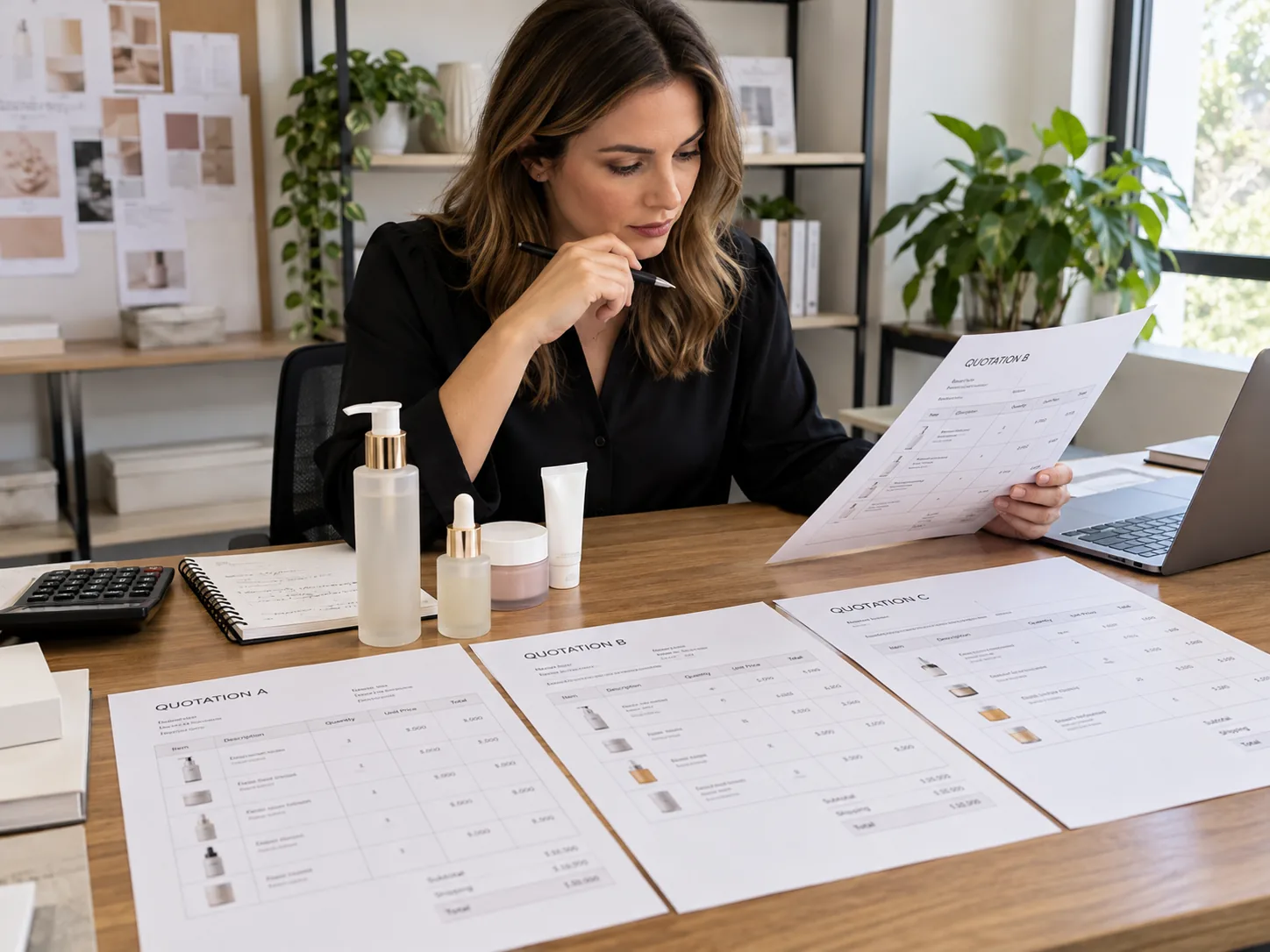
None of these uses is wrong. They are just labels. What matters is what sits behind them, so ask every OEM/ODM factory the same four questions:
- Who develops the formula: you, or us?
- Who owns the formula after launch?
- Can you sell the same formula, or a close version, to another brand?
- Which parts can I change, and which parts are fixed?
Put the answers side by side and you can compare quotes fairly, whatever each factory calls its service.
Who Owns the Formula?
In cosmetics, the formula is the asset you are paying to protect. It is more than the ingredient list. It includes the exact percentages, the grade and source of each raw material, and the order and conditions in which everything is mixed.
That detail matters because ingredient lists are public. Under the ASEAN cosmetic labelling requirements, cosmetics sold in the region must show a full ingredient list on the pack, using standard INCI names. Anyone can read your label. What they cannot read is how much of each ingredient you used, or how the product was made.
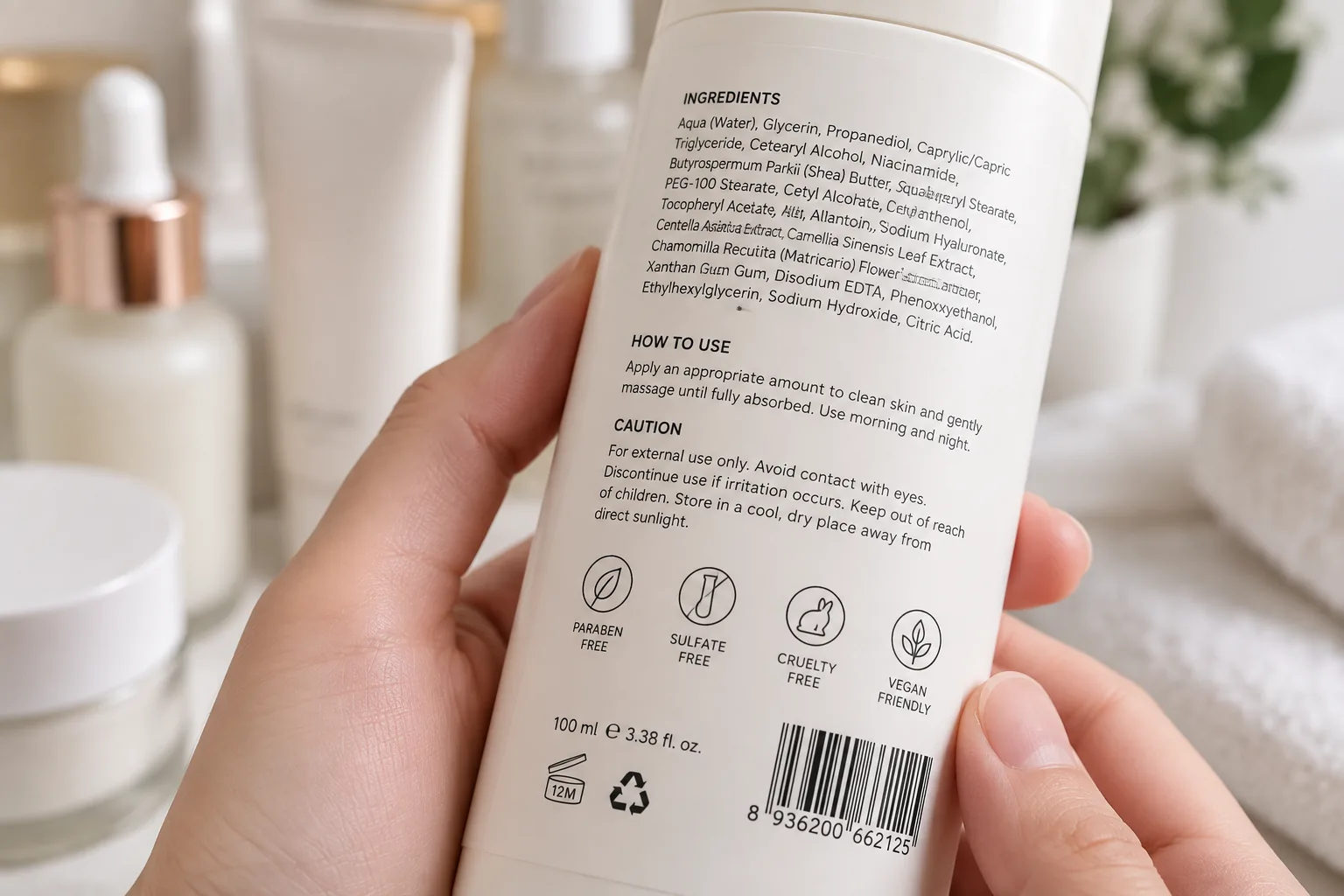
That hidden part is usually protected as a trade secret rather than a patent. The World Intellectual Property Organization explains that a trade secret can be a combination of public elements, as long as the combination itself is kept confidential and gives a business an advantage. WIPO also notes that this protection depends on reasonable steps such as confidentiality agreements, and that it does not stop a competitor who legally buys a product and works out its composition.
So for each model, check the paper trail:
- OEM: the contract should state who owns the formula, whether the factory can reuse it, and what happens to it if you stop ordering.
- ODM: expect the factory to own the base. Ask what rights, if any, you get over your customised version.
- Private label: you own the brand name and the artwork, not the formula.
Sign a confidentiality agreement before you share a detailed brief, and keep copies of every approved sample record and specification.
Registration and Halal: Who Does the Paperwork?
The model you choose also affects how registration works.
In Malaysia, every cosmetic product must be notified to the regulator before it is made or sold for the local market. Under the NPRA cosmetic notification rules, the notification is filed by the company responsible for placing the product on the market, and that company must keep a product information file ready for inspection.

For most brand owners, that means your own registered company is the notification holder, whichever model you pick. ASEAN labelling rules also require the name and address of that responsible company on the pack, along with the country of manufacture.
Where the models differ is in the paperwork the factory can hand over. With ODM and private label, the factory usually has test data and ingredient documents for its bases ready. With OEM, those documents are built during development, which adds time to the project. A factory that offers registration and compliance guidance can prepare these files alongside production, so they are ready when you need them.
Halal follows the same logic. If you sell into Muslim markets, check that the certificate covers the premises and the specific products you are buying, not just the factory's name. This applies to all three routes.
How to Choose Between OEM, ODM and Private Label
No model is better in every case. The right one depends on what the product has to do for your brand.
| Your situation | Best starting route |
|---|---|
| You want to test demand quickly on a small budget | Private label |
| You want a proven product with your own scent, colour or packaging | ODM |
| You need a unique claim, texture or active that defines the brand | OEM |
| You are adding supporting products around a hero item | ODM or private label |
| You sell into markets that expect Halal documents | Any route, with the right certificate scope |
Many brands mix routes. A common path is to start with private label or ODM, learn what customers buy, then develop an OEM hero product once demand is proven. You can also run routes side by side: an OEM serum at the centre of a range, with ODM cleansers and body wash around it. The same logic works for makeup, where a signature lip colour made through cosmetic OEM can sit next to catalogue items. Browse the full product range to see which categories each route covers.
Choose OEM When the Product Is the Brand
Pick OEM when the product itself is your main selling point. It suits brands that can accept a longer development period, several rounds of sampling and a higher upfront spend in return for a formula nobody else has.
Choose ODM When Speed Matters Most
Pick ODM when you need to reach the market quickly, when buyers in your category choose mostly on scent and packaging, or when you are adding products to an existing range.
Choose Private Label to Test the Market
Pick private label for a first launch, a tight budget or a new sales channel. It lets you learn what sells before you commit to development costs.
What to Prepare Before You Talk to a Manufacturer
A clear brief saves weeks, whichever route you choose. Before the first call, prepare notes on:
- Your target customer and the countries you will sell in
- The product type and the claims you want to make
- Reference products for texture, scent or colour
- Your packaging idea and target retail price
- The quantity you expect to order at launch
- Any certificates you need, such as Halal
- Your ideal launch date
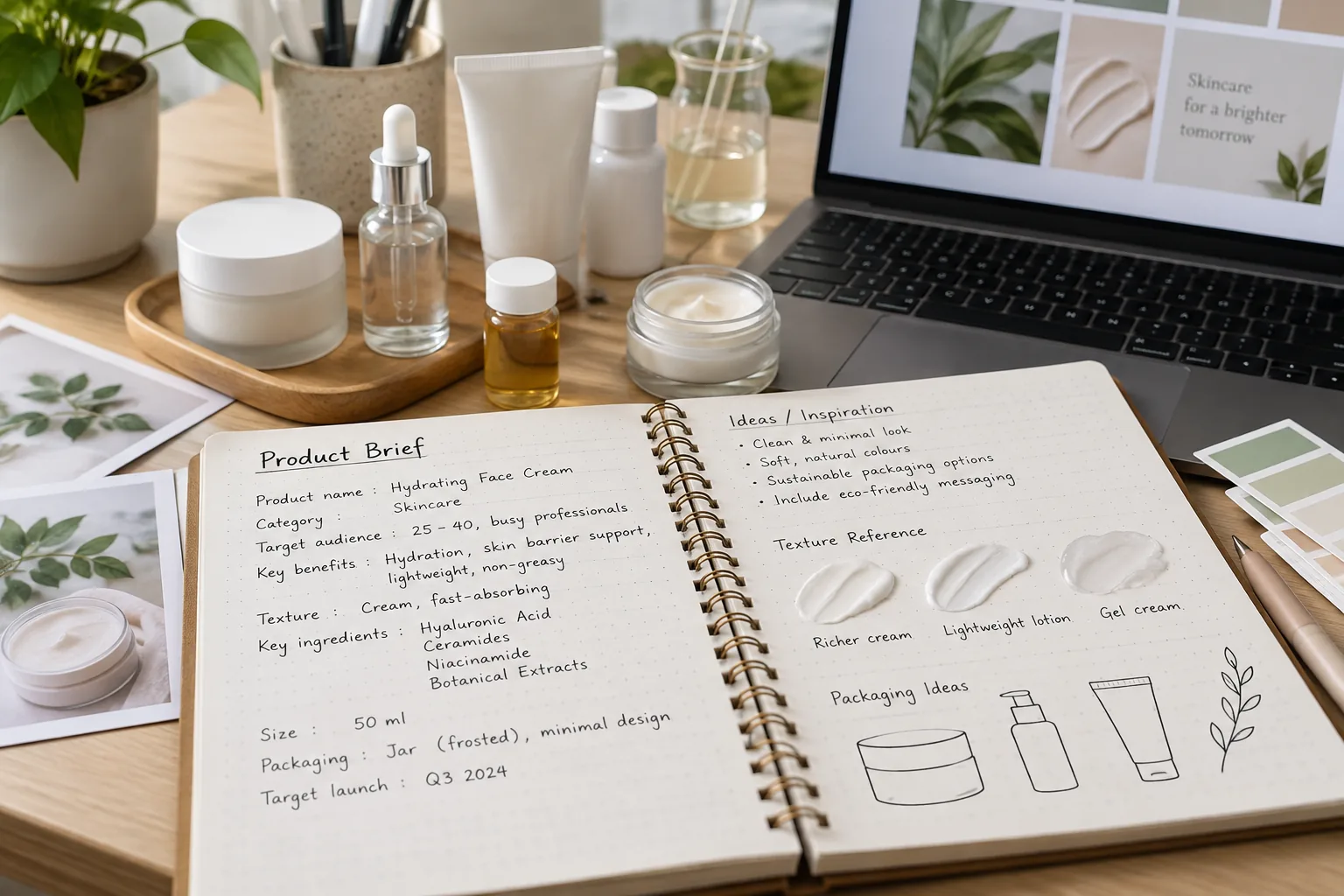
You do not need every answer before you start. A good manufacturer will help you fill the gaps and suggest the route that fits. When your notes are ready, you can send them through our quote page.
Frequently Asked Questions
Is OEM Better Than ODM?
Neither is better in every case. OEM gives you a unique formula and more control, but it takes longer and costs more to develop. ODM gets you to market faster at a lower upfront cost, with less exclusivity. Many brands use both.
Which Is Cheaper, OEM or ODM?
ODM is usually cheaper to start because the development work is already done. OEM costs more up front for sampling and testing. Unit prices depend more on the formula, packaging and order size than on the model itself.
Is Private Label the Same as ODM?
They overlap, but they are not the same. With private label, you take a catalogue product almost as it is and add your brand. With ODM, you start from a proven base and customise parts of it, such as scent, colour or packaging.
Can I Start with ODM and Switch to OEM Later?
Yes, and it is a common path. Starting with ODM or private label lets you test demand and build sales data. Once you know what your customers want, you can brief an OEM version with a formula of your own.
Does a Halal Certified Factory Make My Product Halal?
Not automatically. Check that the certificate covers the specific products and premises involved. You can look up a certificate on the Halal Malaysia portal, which lists separate categories for cosmetics and for contract manufacturing.
Who Registers the Product, the Brand or the Manufacturer?
In Malaysia, the company that places the product on the market files the notification with NPRA. For most brand owners, that is their own company. The manufacturer supplies the technical documents the file needs.
What Is the Difference Between ODM and OBM?
An ODM develops products for other brands to sell. An OBM develops products and sells them under its own brand. Some factories do both, which is why it pays to ask before you choose a base.
Choosing the Right Model for Your Brand
The OEM vs ODM decision comes down to three things: how unique the product must be, how fast you need to launch, and how much you can invest before the first sale. Private label remains the quickest way to test an idea before you commit to either.
Whatever label appears on a quote, ask who develops the formula, who owns it and what you can change. Senwill has worked with brand owners since 2008. Today we manufacture skincare, cosmetics, hair care, body care and fragrance under ISO 9001:2015, GMP and Halal certification, and support OEM, ODM and private label projects from one site in Penang, Malaysia. Tell us what you want to make, and we will suggest the route that fits your timeline and budget.