White Label Skincare: How It Works, Costs & Timelines
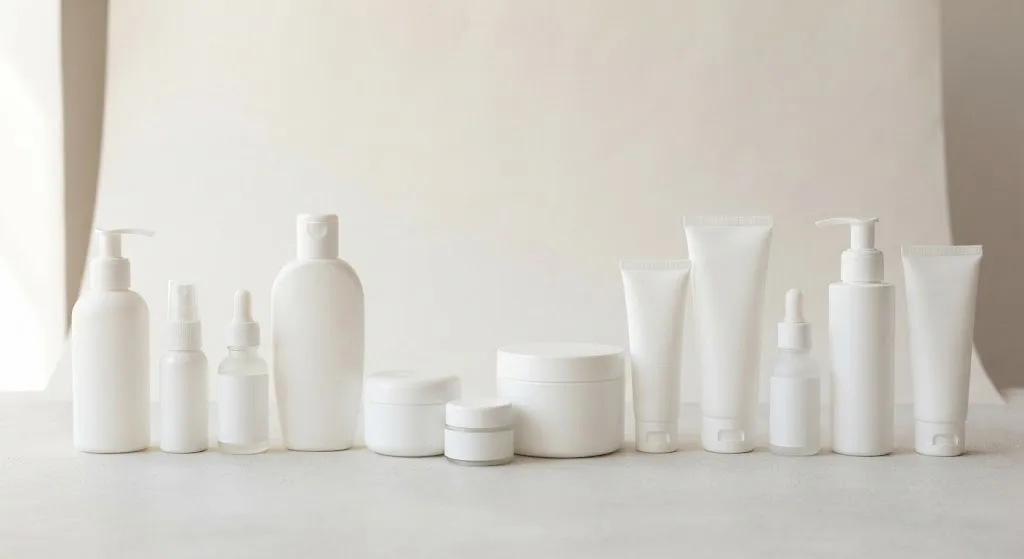
You have a skincare brand idea, an audience and a budget, but no lab and no chemist. White label skincare is usually the first route brand owners look at, because it skips product development altogether. It is also a growing way to launch. Grand View Research estimates that skincare made up 41.7% of white label cosmetics revenue in 2024, and it expects Asia Pacific to be the fastest growing region to 2030.
The hard part is working out what you will actually pay and how long it will take. Quotes rarely include every cost, and much of the timeline sits outside the factory. This guide explains how white label skincare works, every cost line to budget for, the fixed regulatory fees in Malaysia, and what sets the pace at each stage of a launch.
The short answer: white label skincare is a finished, tested product from a manufacturer's catalogue that you sell under your own brand. The formula stays the same. You choose the products, the packaging and the label. It is the fastest and lowest cost way to launch a skincare line, but other brands may sell the same formula.
What Is White Label Skincare?
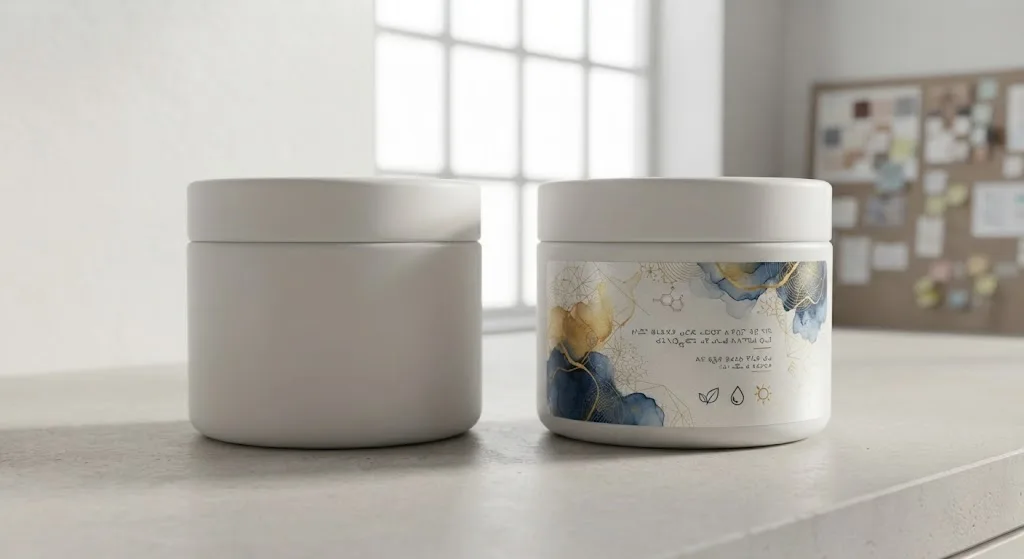
The term comes from general retail. A white label product is made by one company and rebranded by others. The name comes from the image of a blank white label that each seller fills in with its own branding. Many supermarket store brands work this way: one producer supplies several retailers, and only the label changes.
In skincare, the product is a finished formula from the manufacturer's catalogue. It has already been developed, tested for stability and produced before. You choose it, put your brand on it and sell it.
Here is what you usually control, and what stays fixed:
- You choose: the products in your range, the pack size, the container, the brand name and the label or box design. Some factories also offer a small set of scents.
- Fixed by the factory: the formula, the ingredient list and the claims its test data supports.
White Label vs Private Label Skincare
The two terms are often used as if they mean the same thing. In practice, most manufacturers draw the line at how much you can change. White label means a ready formula rebranded with minimal changes. Private label usually allows more customisation under your brand, such as a different scent, texture or featured ingredient, and it can come with some exclusivity.
| Factor | White label | Private label | Custom formula (OEM) |
|---|---|---|---|
| Formula changes | None, or scent only | Selected changes | Built to your brief |
| Exclusivity | Low: others may sell the same formula | Possible, if agreed in writing | High |
| Upfront cost | Lowest | Low to medium | Highest |
| Time to launch | Fastest | Fast | Longest |
| Who owns the formula | The manufacturer | Usually the manufacturer | Usually you, if the contract says so |
| Best for | Testing demand and first launches | Building a distinct range | A hero product nobody else has |
Many brands start with white label, then move to private label skincare products or a custom formula once they know what sells. You can see how these routes compare at one factory, including how they can run within the same project.
Which Products Can You White Label?
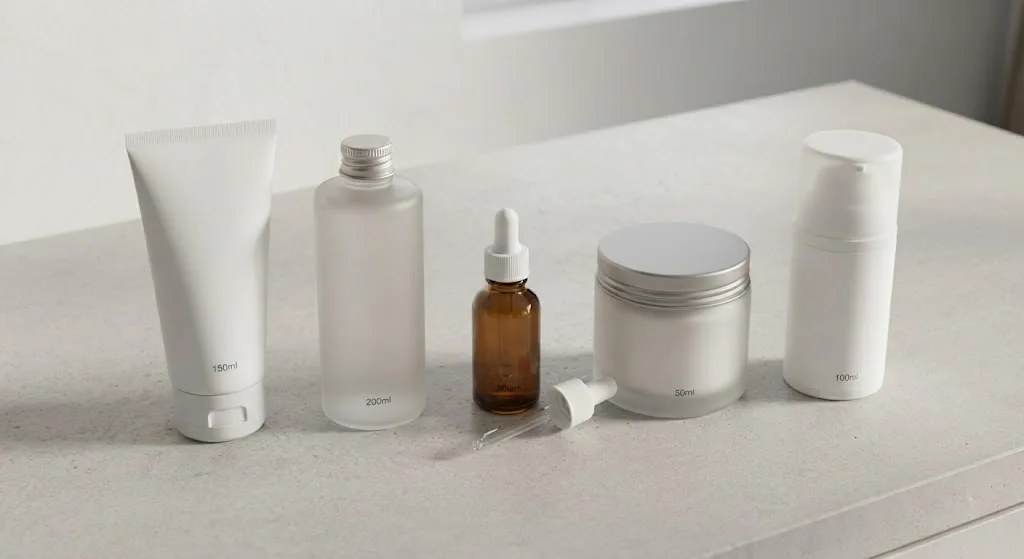
Most white label skincare products come in the same core formats. Each format has its own point to check before you commit:
- Facial cleansers: often the simplest place to start, as foam, gel and oil formats are widely available as proven bases.
- Toners: check whether the formula suits your target skin type, such as oily or sensitive skin.
- Serums and ampoules: the active ingredient drives the cost, so ask which active each serum contains and at what level.
- Moisturisers and creams: texture varies widely between bases, so sample several before you choose.
- Face masks: sheet, clay and gel masks need very different packaging, which changes your minimum order.
- Sunscreen: SPF claims rest on test data, so ask for the SPF report for the exact formula you will sell.
If you plan a complete routine rather than one product, our full skincare range shows how these formats fit together.
How the Process Works, Step by Step
Most white label projects follow the same six steps. Several of them can run at the same time, and that is where most of the time is saved.
Step 1: Pick Products and Test Samples
Shortlist products from the catalogue and order samples. Use them yourself for a few weeks and share them with a small group of target customers. At the same time, ask for each product's full ingredient list and a summary of its stability and microbial test results.
Step 2: Choose Packaging That Suits the Formula
Packaging is not only about looks. The container has to protect the formula inside it. A vitamin C serum, for example, is sensitive to light and air, so it may need an opaque or airless pack. Ask whether each base was tested in the type of container you want. If it was not, a compatibility check may be needed before production.
Step 3: Design a Compliant Label
Your label carries legal content as well as branding. Under the ASEAN cosmetic labelling requirements, cosmetics must show a full ingredient list using INCI names, the name and address of the company responsible for the product, and the country of manufacture. So your own company details go on the pack. Claims must also describe a cosmetic benefit, not a medical one.
Step 4: Notify the Product with NPRA
In Malaysia, every cosmetic product must be notified to the National Pharmaceutical Regulatory Agency (NPRA) before it is made, imported or sold. The notification is filed by the company responsible for the product, called the notification holder. For most brand owners, that is their own company or an appointed holder who files on their behalf. Each product and each variant, such as a second scent, needs its own notification. A manufacturer that offers registration and compliance support can help you prepare the technical file.
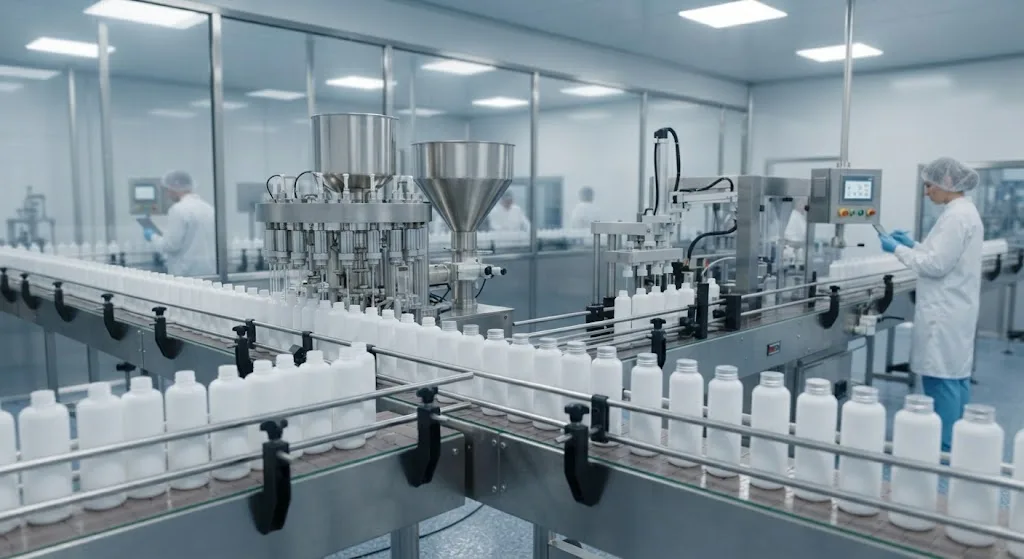
Step 5: Produce, Fill and Check the Batch
Once your packaging and labels reach the factory, the product is made, filled and packed. Each batch should be checked before release, and the factory should keep batch records you can ask to see. Batch checks are separate from the stability testing done when the formula was first developed. Both matter.
Step 6: Ship and Plan Your Reorder
Agree the delivery terms, who arranges freight and where the stock will be stored. Plan your first reorder before you launch, not after you sell out, because packaging lead times apply again on every production run.
What It Really Costs
There is no single price for white label skincare, because the product you sell is more than the formula. The number that matters is your landed cost per unit: everything you pay to get one sellable unit into your warehouse.
| Cost line | How it is charged | What pushes it up |
|---|---|---|
| Formula and filling | Per unit | Costly actives, larger fill sizes |
| Container and closure | Per unit | Glass, airless pumps, droppers, custom colours |
| Label or print | Per unit, plus setup | Special finishes, printing directly on the container |
| Outer box | Per unit, plus setup | Custom printed boxes and inserts |
| Artwork and design | One time | More products and variants |
| Samples | One time | More products tested |
| NPRA notification | RM50 per product and per variant, renewed every two years | More variants |
| Freight and import duties | Per shipment | Glass weight, air freight, destination rules |
| Storage and fulfilment | Monthly or per order | Larger first orders |

The NPRA fee is the only fixed, published cost on the list. The NPRA notification guideline sets the processing fee at RM50 for each product and each variant, with the same fee to renew. A notification stays valid for two years, and the fee is not refunded once paid.
To work out your landed cost per unit, add up the per unit costs and multiply by your order quantity. Add the one time costs, then divide the total by the number of units you can sell. Ask each manufacturer to quote every line separately, so you can compare quotes like for like.
What Sets the Minimum Order
Minimum order quantities vary by product type and packaging. With white label, the formula already exists, so the packaging often decides your real minimum. A stock bottle from the factory's range usually has a lower minimum than a custom printed tube or box, which carries its own minimum from the packaging supplier.
Ways to Keep the First Order Lean
- Launch with three to five products rather than a full range.
- Use stock containers with applied labels before you move to custom printed boxes.
- Limit variants, because each extra scent or shade needs its own notification and fee.
- Test samples properly before you commit to a full production run.
How Long It Takes
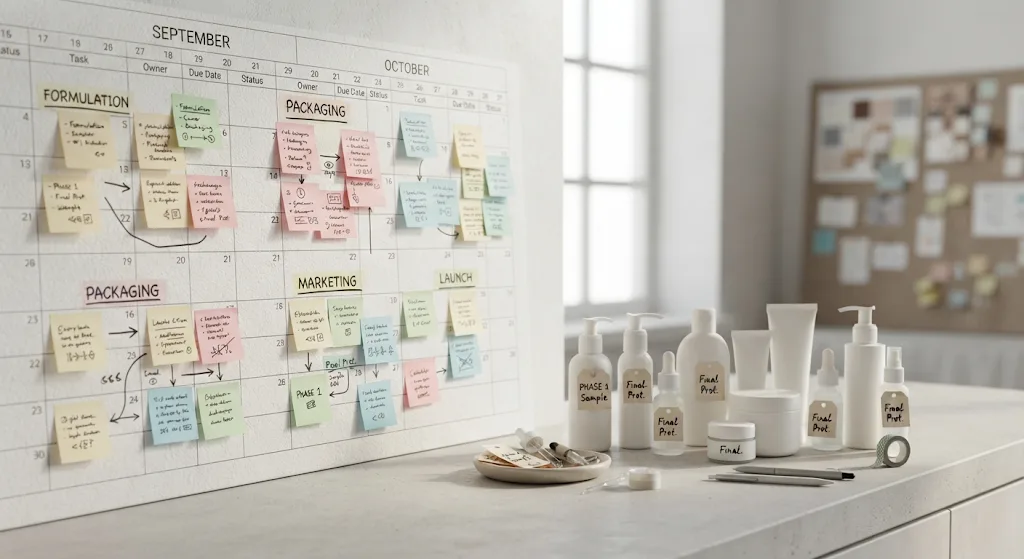
Quotes tend to focus on production lead time, but production is only one stage. Most of the time goes into decisions and approvals on your side, and into packaging.
| Stage | What happens | What sets the pace |
|---|---|---|
| Sampling | You test the shortlisted products | How quickly you decide |
| Packaging | Containers and closures are sourced | Stock versus custom packaging |
| Artwork | Labels and boxes are designed and approved | Rounds of changes and label rules |
| Notification | The product is notified with NPRA | Final product details being ready |
| Production and checks | Bulk is made, filled and batch checked | Factory schedule and packaging arrival |
| Shipping | Stock moves to your warehouse | Sea or air freight and customs |
The regulatory step is usually the quickest. According to NPRA's FAQ, the notification number is generated within one to three working days after payment is confirmed, provided all requirements are met.
Two habits save the most time. First, run sampling, packaging and artwork at the same time rather than one after another. Second, file the notification only once the product name, variants and ingredient list are final. Some changes after notification need a new notification and a new fee, which NPRA calls a Type 2 change.
Ask every manufacturer for a dated plan for each stage, in writing, before you pay a deposit. You can request one through our quote page.
Selling in Other Markets
If you plan to export, allow for each market's own rules. Under the same ASEAN framework, the company responsible for a product must notify the regulator in each member state where it will be sold. A Malaysian notification does not cover Indonesia or Singapore.
Some importing countries also ask for a Certificate of Free Sale, which confirms the product can be freely sold in Malaysia. NPRA issues it on request to the notification holder, at RM50 per copy.
For Muslim markets, Halal status often matters to buyers. A factory's Halal certificate covers specific products and premises, so check that your exact product is included. You can verify a certificate on the Halal Malaysia portal.
Pros and Cons
White label works well for some launches and poorly for others. Weigh both sides against your plan.
Pros:
- Fast to launch, because the formula already exists.
- Lower upfront cost, with no development fees.
- Proven formulas that already have test data behind them.
- A low risk way to test demand before you invest in development.
Cons:
- Other brands may sell the same formula.
- Few or no changes to the formula are possible.
- You do not own the formula, so you depend on the manufacturer for supply.
- It is harder to stand out on price in crowded categories.
How to Choose a Manufacturer
The right white label skincare manufacturer makes the rest of the process easier. NPRA requires the notification holder to make sure the manufacturer follows cosmetic good manufacturing practice (GMP), so start there. Then check:
- Certificates: GMP as a minimum, plus ISO 9001 and Halal where your market needs them.
- Test data: stability and microbial results for each base you shortlist.
- Ingredient lists: the full INCI list for each product, before you design labels.
- Minimums: per product, per variant and per packaging item.
- Lead times: in writing, for both the first order and reorders.
- Paperwork: who files the NPRA notification and prepares the product information file.
- An upgrade path: whether you can move to private label or your own formula later.
Frequently Asked Questions
Is White Label Skincare Good Quality?
It can be. Quality depends on the manufacturer, not the model. Look for GMP certification, stability and microbial test data for each base, and batch records for your production run.
Can I Change a White Label Formula?
Usually not, beyond choices such as scent where the factory offers them. If you want to change the texture, actives or claims, you are moving into private label or custom development.
What Is the Usual Minimum Order?
It varies by product and packaging. Ask each manufacturer for the minimum per product, per variant and per packaging item. The highest of these becomes your real minimum.
Do I Need a Company to Sell White Label Skincare in Malaysia?
The NPRA notification must be filed by the company responsible for placing the product on the market. You can use your own registered company or appoint a notification holder to act for you.
Can White Label Products Be Sold as Halal?
Only if the product is covered by a valid Halal certificate. Ask your manufacturer which products its certificate covers, and check the certificate yourself before you make any Halal claim.
Can I Move from White Label to My Own Formula Later?
Yes, and it is a common path. Many brands start with white label to test demand, then develop a custom hero product once they know what sells.
Is White Label Right for Your Brand?
White label skincare suits brand owners who want to launch quickly, test demand and keep upfront costs low. It suits a brand less well when its promise depends on a formula nobody else has. Budget for the full landed cost, not just the unit price, and plan your timeline around packaging and approvals rather than production alone.
Senwill has worked with brand owners since 2008. We manufacture skincare in Penang, Malaysia, under ISO 9001:2015, GMP and Halal certification, and offer white label, private label and custom routes from one site. Tell us which products you want to launch, and we will recommend the route, minimum order and timeline that fit your plan.