Private Label Beauty Products: How to Launch Across Categories
TL;DR
- Private label beauty products are proven formulas from a manufacturer, sold under your own brand. They are the fastest way to test a new category.
- Categories behave differently. Rules, testing, packaging, and the number of variants change a lot between skincare, makeup, hair care, body care, and fragrance.
- Start with one category that suits the way you already sell, launch a small core range, then add a second category for the same customer.
- Each new product needs its own notification, checks, and packaging plan, and minimum orders usually apply per product and per packaging item.
- A manufacturer that covers several categories keeps your paperwork, quality standards and Halal scope consistent as the range grows.
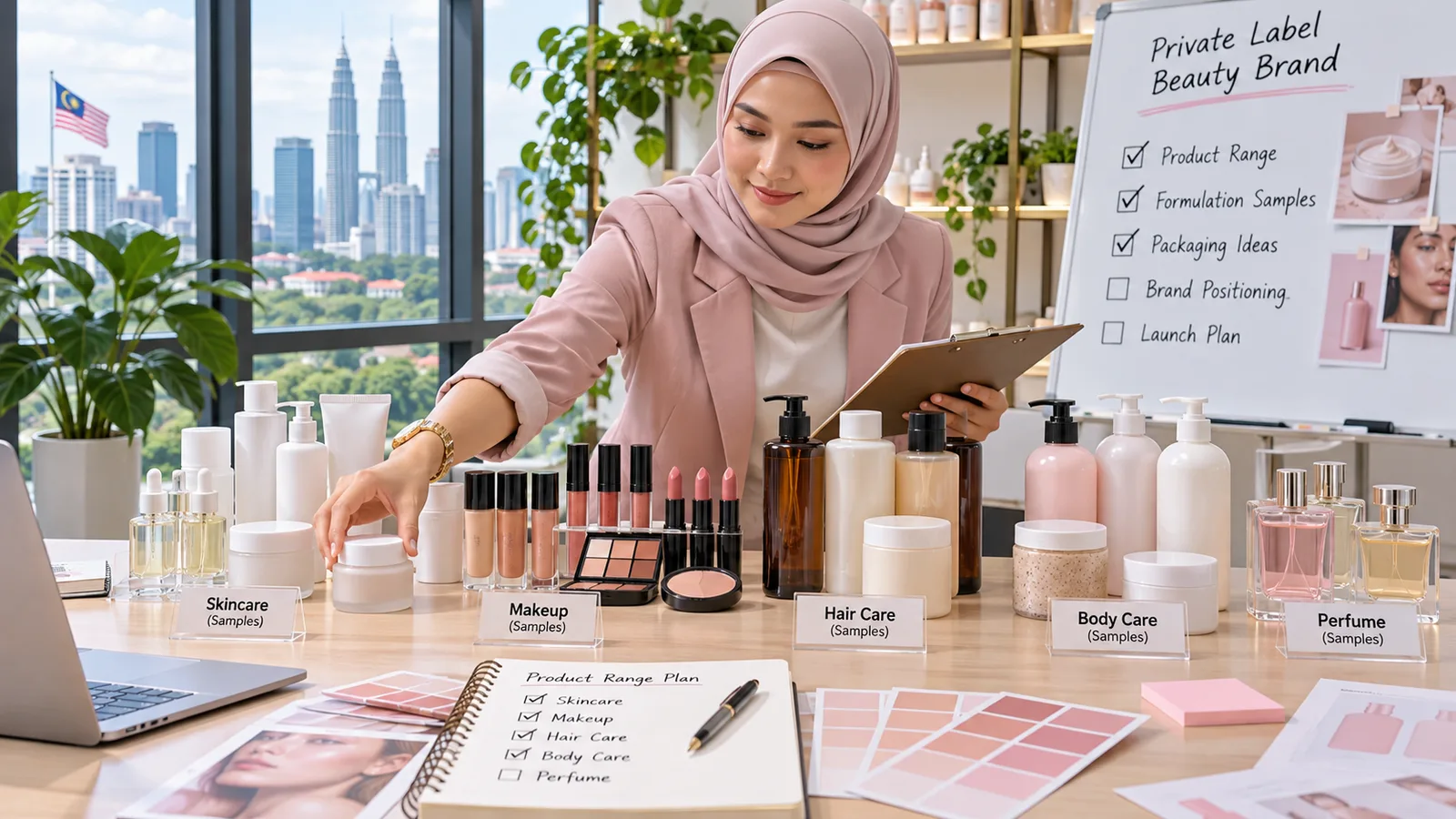
Few beauty brands stay in one category for long. A skincare label adds a body lotion. A salon brand adds a scalp treatment, then a fragrance. Private label beauty products make that growth possible without building a lab, because you choose formulas a manufacturer already makes and put your own brand on them.
The catch is that each category works differently. A lip range brings shade decisions a serum never needs. A sunscreen carries rules a shower gel does not. A perfume can face shipping limits a hand soap will never meet. This guide explains what changes from one category to the next, how to pick your first, and how to add more without losing control of cost, compliance or quality.
What Private Label Beauty Products Are
With private label, the manufacturer makes a formula it has already developed and tested. You choose it, approve a sample, and sell it under your brand. You usually pick the packaging and label design, and sometimes small changes such as scent or colour. In most private label deals, the formula itself stays with the manufacturer.
That sets it apart from the other two routes. With ODM, a manufacturer adapts one of its bases to your brief. With OEM, the formula is developed for you. Our article on how OEM and ODM differ explains the trade-offs, and our private label cosmetics guide covers how the model works from sample to first order.
This article picks up where those guides stop: what happens when you want more than one type of product under the same brand name.
Why Each Category Behaves Differently
Private label does not work equally well everywhere. Coresight Research reported, using Euromonitor data, that private label had its highest share in US suncare, at 12% in 2018, while fragrance and deodorants sat at just 0.1%. It linked the low overall share partly to brand image, which matters most in fragrance and colour cosmetics, where price has less influence on what people buy.
Those figures come from US retail and are several years old, so treat them as a pattern rather than a forecast. The pattern still helps. Where buyers judge a product by how it performs, a proven formula travels well. Where buyers pay for a story, a scent or a shade, the brand has to work harder.
Four things change from one category to the next:
- Rules: some claims move a product into a stricter class, such as sun protection or treating dandruff.
- Testing: water-based creams, oils, powders, and alcohol based perfumes fail in different ways, so the checks differ.
- Packaging: pumps, droppers, lipstick cases, tubes and glass sprayers come from different suppliers, each with its own minimum order.
- Variants: a cleanser may come in one version, while a lip range may need eight shades, and every shade is a separate item to label, stock, and reorder.
Private Label Beauty Products by Category
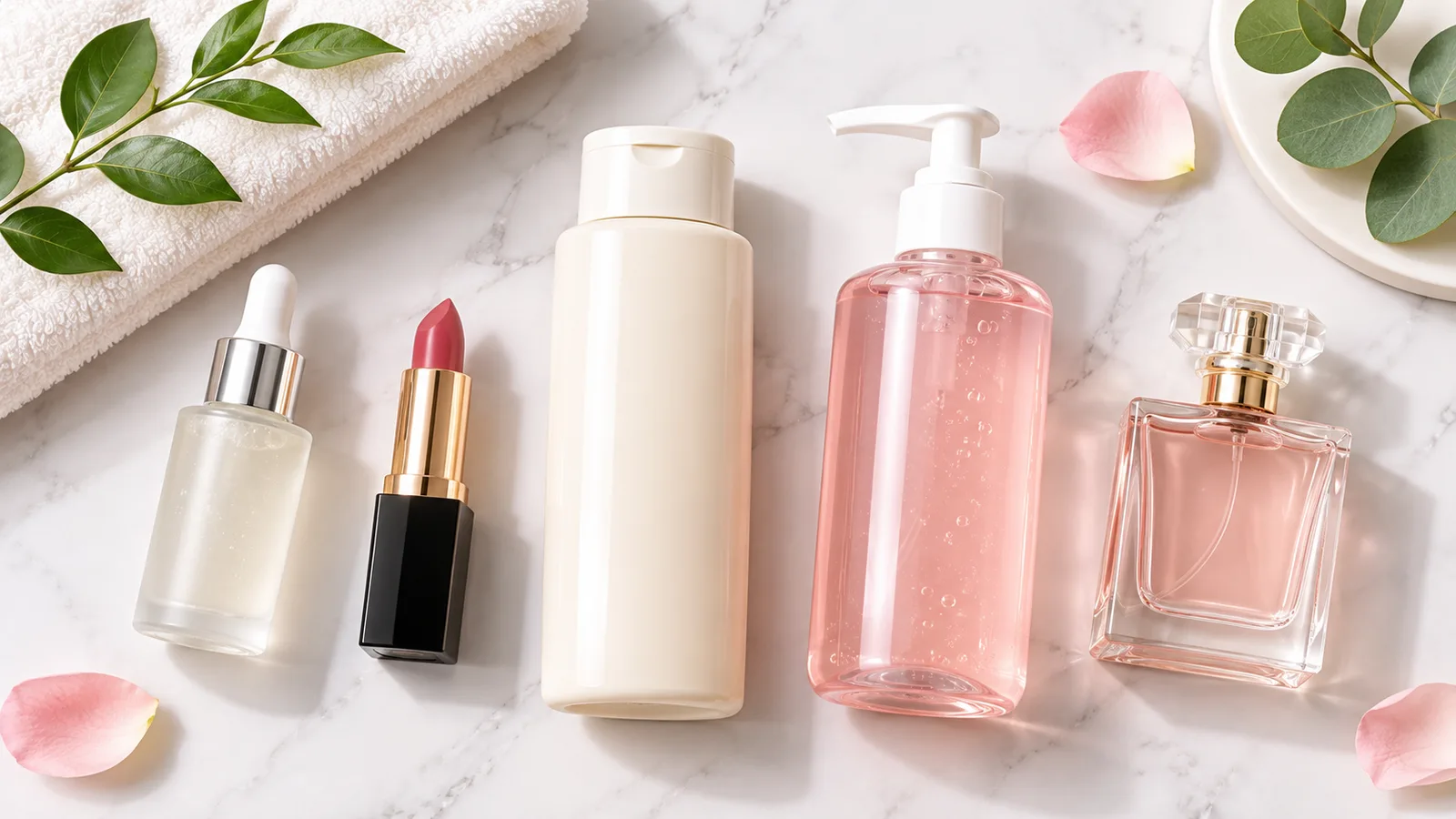
The table below compares the five main beauty categories. Use it to see where the time and the rules sit before you commit.
| Category | Common first products | What takes the most time | Rules to watch |
|---|---|---|---|
| Skincare | Cleanser, toner, serum, moisturiser | Stability and packaging checks | Sun and acne claims, preservatives |
| Makeup | Lip products, foundation | Shade matching and component sourcing | Permitted colourants, number of shades |
| Hair care | Shampoo, conditioner, hair treatment | Scent choice and bottle sourcing | Dandruff and hair growth claims |
| Body care | Body wash, body lotion, hand soap | Packaging in larger sizes | Antibacterial claims, fragrance levels |
| Fragrance | Perfume, reed diffuser | Scent selection and glass sourcing | Fragrance ingredient limits, shipping rules |
Skincare
Private label skincare is where most brands start. Cleansers, toners and moisturisers are bought often, and buyers can judge them quickly. The main work is checking that a water based formula stays stable in the packaging you choose and in the heat of the markets you sell to. You can see the formats a factory covers on our skincare manufacturing page.
Sunscreen needs extra care. In Malaysia it is regulated as a cosmetic, but the NPRA's cosmetic requirements only allow UV filters from the ASEAN list, within set limits, and point to a separate guideline for sunscreen products. In the United States, the FDA treats a moisturiser or makeup with sun protection claims as both a cosmetic and a drug. If sun protection is part of your plan, look at private label sunscreen options early. The claim, not just the formula, decides which rules apply.
Makeup
Private label makeup is where brand image carries the most weight and where the number of items grows fastest. One lipstick in six shades is six items to approve, label, stock and reorder. Colour must come from colouring agents permitted for cosmetics, and the shade a buyer sees online has to match the one in the case. Most brands start with one format, such as lip products, before moving to base makeup. Foundation needs a wider shade range to suit different skin tones, so it costs more to launch well. Our cosmetics OEM page shows the makeup formats we produce.
Hair Care
Private label hair care suits brands with a professional channel, such as salons, because stylists can recommend products to clients they see regularly. Shampoo and conditioner are often bought together and used up quickly, which helps repeat orders. The main risk is claims. The same FDA guidance treats an antidandruff shampoo as both a cosmetic and a drug, because treating dandruff is a drug use, and it lists claims to restore hair growth as drug claims too. Our hair care manufacturing page lists the shampoo, conditioner and treatment formats available.
Body Care
Body care is often the easiest second category. Body wash, body lotion and hand soap use simple formats, sell in larger sizes and are used every day, so they reorder well. The trade off is margin. Buyers expect a lower price per millilitre, so packaging cost matters more, and large bottles with pumps take up more space in shipping. Claims need care here too. In Malaysia, hand sanitisers and antibacterial washes each have their own NPRA guideline. Our body care range covers body wash, shower gel, body lotion and hand soap.
Fragrance
Fragrance has the most brand pull and the least room for a generic product, which fits the low private label share above. Scent is also the hardest thing to move between categories. The International Fragrance Association sets limits for each type of product. Its standard on citrus oils, for example, gives separate maximum levels for 12 product categories. It sets no limit for rinse off products but a strict one for leave on products used on skin exposed to the sun. A citrus scent that works in a shower gel may need reworking before it can go into a body lotion. Alcohol based perfume can also count as dangerous goods for air freight, so ask about shipping before you plan an export launch. See our perfume and fragrance manufacturing page for the formats we make.
How to Choose Your First Category
The best first category is usually the one closest to the customers you already have. These questions help:
- Where do you sell? Salons lean towards hair care and pharmacies towards skincare. Direct sales teams may prefer skincare and body care sets that are easy to demonstrate.
- How often will customers reorder? Cleansers, shampoo and body wash run out in weeks. A bottle of perfume may last months.
- How many variants will you need? One serum is one item. A foundation range can run to a dozen shades or more.
- Which claims do you want to make? Sun protection, acne and dandruff claims bring more rules and more testing.
- What can you afford to stock? Multiply each product by its sizes, shades or scents, then by the minimum order for each.
If two categories look equal, start with the one that has fewer variants and simpler claims. You can learn the process on a cleanser or a body wash before you take on shades, scents or sun protection.
Build Your Range in Stages
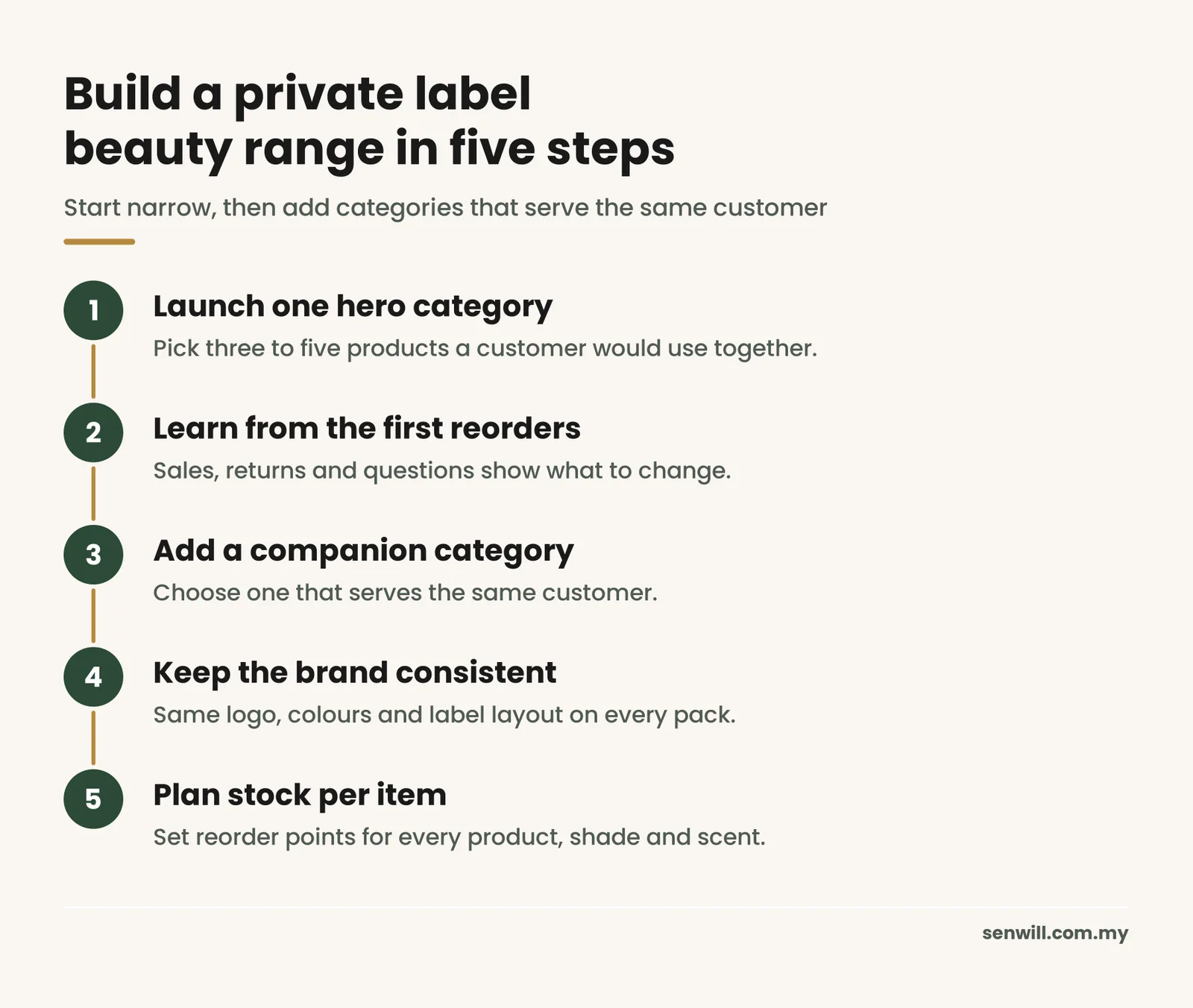
A range that grows in stages is easier to fund and easier to fix. Five steps keep it in order:
- Launch one hero category. Pick three to five products a customer would use together, such as a cleanser, toner and moisturiser.
- Learn from the first reorders. Sales, returns and customer questions show what to change before you add more.
- Add a companion category. Choose one that serves the same customer, such as a body lotion for a skincare buyer or a hair treatment for a salon client.
- Keep the brand consistent. Use the same logo, colours and label layout on every pack, even when bottles, tubes and cases come from different suppliers.
- Plan stock per item. Set reorder points for every product, shade and scent, so a best seller does not run out while slow items tie up cash.
Packaging is often what holds a range together visually. A manufacturer that offers packaging and label support can match label designs across formats and check that each pack suits its formula.
What Changes When You Add a Second Category
Adding a category is closer to a new launch than a small extension. Expect these steps to start again:
- Notification: in Malaysia, each cosmetic product must be notified to the NPRA by the notification holder before it goes on sale, and a safety assessment is needed for each product. Other markets have their own rules.
- Testing: a new formula and a new pack need their own stability and compatibility checks.
- Packaging suppliers: new components bring new lead times and new minimum orders.
- Claims and labels: each category has its own wording limits and warnings, such as the sun exposure warning that ASEAN rules require on sunscreen labels.
One Manufacturer or Several?
Some brands use a different specialist for each category. That can make sense for a very technical product, such as a long wear foundation. The cost is more contracts, more audits, more paperwork and quality standards that differ from one supplier to the next.
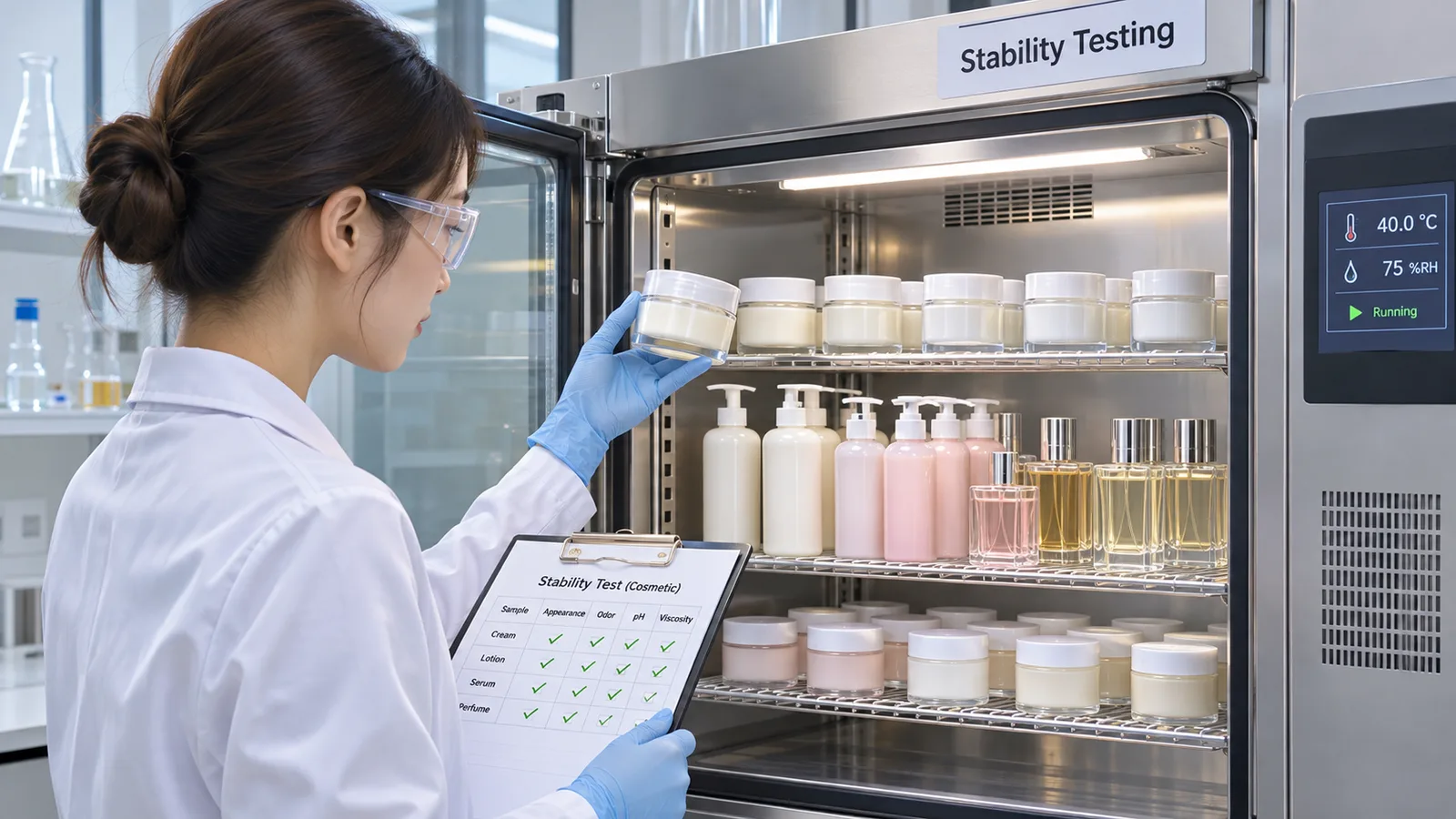
One manufacturer that covers several categories gives you one point of contact, one set of quality systems and one team handling registration and compliance for your product files. Ask any manufacturer which categories it makes in house and which it buys in from other factories. In Malaysia, the NPRA inspects a new local factory or production line before products from it can be notified, so also ask which lines already make each category you plan.
Costs and Minimum Orders Across Categories
Minimum order quantity (MOQ) applies per item, not per brand. Ten products with three scents each can mean thirty separate minimums. Packaging often has higher minimums than the product itself, especially printed boxes and custom bottles.
A few ways to keep a range across categories affordable:
- Share one bottle or jar across several products, and change only the label.
- Use stock packaging for the first run, and switch to custom packaging later.
- Limit shades and scents at launch, then add the ones customers ask for.
- Ask whether the factory can run smaller first batches for a new category.
Browse the categories we make to see which formats can share packaging.
Halal and Export Checks for Each Category
If you sell to Muslim markets, check Halal cover product by product, not just for the factory. Fragrance and colour ingredients deserve a close look, because they vary most between categories. Our Halal certification guide explains what to ask.
For export, the rules of the destination country apply to each product you send. A range that is fine in Malaysia may need different labels, notifications or claims for the Middle East, Central Asia or the rest of Southeast Asia. Plan these market by market, and build the time into your launch plan.
Frequently Asked Questions
What Are Private Label Beauty Products?
They are beauty products made by a manufacturer from its own proven formulas and sold under another company's brand. The brand chooses the formula, packaging and design. The manufacturer makes and checks each batch.
Which Beauty Category Is Easiest to Start With?
Skincare basics and body care are often the simplest, because they have fewer variants and simpler claims than makeup, sunscreen or fragrance. The best choice still depends on where and how you sell.
Can One Manufacturer Make Products Across Several Categories?
Yes, if it has the production lines and approvals for each one. Ask which categories it makes in house, and check that its quality certificates and Halal cover include each product type.
Does Each New Product Need Its Own Notification?
In Malaysia, yes. Each cosmetic product must be notified to the NPRA before it goes on sale. Other markets have their own systems, so check each one you plan to sell in.
How Many Products Should a First Range Include?
A common starting point is three to five products in one category. That is enough to tell a clear story and test demand without spreading stock too thin.
Can I Switch to a Custom Formula Later?
Yes. Many brands use private label to test demand, then move a best seller to ODM or OEM to make it more unique. Our guide to how OEM manufacturing works explains that route. Agree in advance what happens to the existing product, its notification and its packaging.
Start Narrow, Then Expand
Private label beauty products let you test a category quickly, but each category brings its own rules, tests, packaging and variants. Start with the one closest to your customers, launch a small core range, and add a companion category once the first one reorders well. Plan notifications, packaging, and stock item by item, and keep your brand consistent across every format.
Senwill has made skincare, cosmetics, hair care, body care and fragrance for brand owners since 2008. We are ISO 9001:2015 and GMP certified, Halal compliant, and supply brands in 16+ countries from one factory in Penang. If you are planning a range across categories, talk to our team about which products to launch first.